

Quick answer: For Everest Base Camp, pack broken-in trekking boots, 2–4 technical shirts, insulating layers, a warm down jacket, waterproof outerwear, thermal clothing, gloves, sun protection, a headlamp, an appropriate sleeping bag and a 30–35L daypack. In a supported trek, your porter carries your overnight duffel while you carry daily essentials.
This guide is written for the classic 15-day Everest Base Camp trek, but it also helps travelers planning shorter or longer routes. The trail climbs from Lukla to Everest Base Camp at roughly 5,364m; the Kala Patthar viewpoint reaches approximately 5,545m. Higher altitude does not mean you need technical climbing gear on the standard teahouse route. It means you need reliable layers, dry clothing and a sensible carrying system.
The recommendations below are starting points, not a compulsory shopping list. Adjust quantities to your trekking month, personal comfort, laundry plans and the services included in your particular trip. Last editorial update: 9 October 2026.
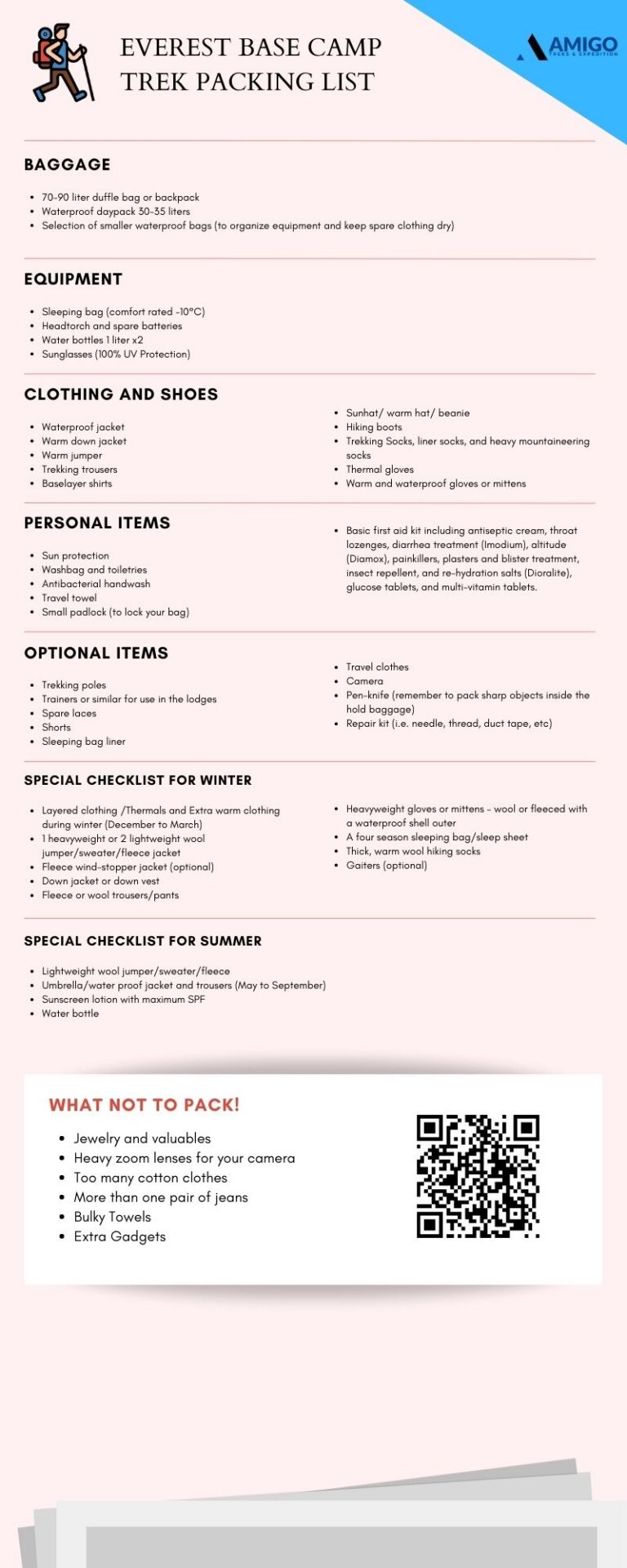
Everest Base Camp Packing List at a Glance
| Essential item | Suggested amount | Packing note |
|---|---|---|
| Broken-in hiking boots | 1 pair | Well-fitting and comfortable on long descents |
| Moisture-wicking shirts | 2–4 | Prefer quick-dry fabrics over cotton |
| Trekking trousers | 2 pairs | Add thermal bottoms for cold days |
| Thermal base-layer sets | 1–2 sets | For cold mornings, evenings and sleeping |
| Fleece or active insulating layer | 1–2 | Easy to add or remove while walking |
| Warm down or synthetic jacket | 1 | Essential at colder higher lodges |
| Waterproof jacket and trousers | 1 each | Wind and precipitation protection |
| Hiking socks; underwear | 3–5 pairs; 5–7 pairs | Adjust for washing opportunities |
| Warm hat; sun hat; neck gaiter | 1 each | Protect against both cold and sun |
| Light gloves; insulated gloves | 1 pair each | A layered approach works well |
| Trek daypack; duffel | 30–35L; ~70L | Check what your operator supplies |
| Headlamp; water capacity | 1; about 2L or more | Carry a backup light/power option |
| Sleeping bag | 1 | Select by comfort rating and season |
Use this checklist to plan rather than automatically purchase everything. Amigo’s standard 15-day package includes a 70L duffel and, when required, rental of a four-season sleeping bag and down jacket. Confirm arrangements before departure.
How Much Luggage Can You Take to Everest Base Camp?
Amigo’s published standard Everest Base Camp package currently specifies 10kg checked baggage plus 5kg cabin baggage on Lukla flights. These are the package’s stated flight allowances, not a guarantee for every carrier or itinerary; verify the operating airline’s current rules before departure. Excess baggage charges may apply, and airline restrictions can change.
- Personal daypack (usually 30–35L): water, lunch/snacks, medication, sunscreen, waterproof shell, a warm layer, documents, phone, camera and other valuables.
- Porter-carried duffel (70L supplied with Amigo’s standard package): spare clothing, toiletries, sleeping bag, lodge shoes and items not needed while walking.
- At the airport: pack and weigh your checked and cabin baggage separately. Capacity in litres is not the same as an airline’s weight allowance.
- Keep with you: essential medication, travel documents, electronics and lithium power banks as permitted by the airline; do not put power banks in checked baggage.
- Porter loads: ask Amigo for the confirmed weight limit applicable to your booking; the number of litres in a duffel does not establish how much a porter may carry.
If you have a large suitcase for travel in Nepal, arrange to leave non-trekking items securely at your Kathmandu hotel or another agreed storage location. Do not bring valuables you do not need on the mountain.

Complete Everest Base Camp Gear and Clothing List
Clothing: layers for walking and cold evenings
- 2–4 moisture-wicking shirts: one can be worn while others dry. Long sleeves provide additional sun protection.
- 1–2 thermal tops and 1–2 thermal bottoms: useful at cold night stops and before sunrise.
- 1–2 fleeces or active mid-layers: a lighter layer for walking and a warmer layer for breaks if needed.
- 1 insulated jacket: a well-fitting down or synthetic jacket for low activity and freezing conditions. Keep it dry.
- 1 waterproof/breathable shell jacket and waterproof overtrousers: pack these even when the forecast looks favorable.
- 2 quick-dry trekking trousers: one to wear, another spare. Shorts are optional lower down.
- 3–5 pairs of hiking socks and 5–7 pairs of underwear: merino or synthetic fabrics dry better than heavy cotton.
- 1 sun hat, 1 warm hat and 1 neck gaiter: strong UV exposure and cold wind are both common concerns.
- Light gloves plus insulated gloves or mittens: waterproof outer protection is useful in snowy or wet conditions.
Start cool rather than sweating heavily on steep ascents; wet base layers can make stops uncomfortable. The outer layer should protect against wind and moisture, and the insulating layer should be easy to reach when you pause.
Footwear and foot care
- 1 pair of broken-in trekking boots: prioritize fit, traction, ankle comfort and enough room for toes on descents. Test them on consecutive walks before Nepal.
- 1 lightweight pair of shoes or sandals: for teahouses and evening rest.
- Blister plasters or tape, nail clippers and spare laces: small items that can save a hiking day.
- Gaiters or traction devices: situational, especially on icy or snowy routes; ask your guide about actual conditions. Technical crampons are not routinely required for the standard trail.
Sleeping gear and bags
- Sleeping bag: choose by the manufacturer’s tested comfort rating, not just a marketing label such as ‘four-season’ or a lower-limit figure. Cold tolerance, lodge insulation and season all matter.
- Sleeping bag liner: optional for cleanliness and a little extra warmth, but not a substitute for adequate insulation.
- 70L duffel: provided with Amigo’s standard EBC package; line it with a waterproof bag and use smaller dry bags for organization.
- 30–35L daypack: adjustable straps, comfortable fit and a rain cover or waterproof liner.
- Earplugs: useful in teahouses. A compact travel towel is preferable to a bulky bath towel.
Do not assume that a sleeping bag advertised as ‘−10°C’ has a comfort rating of −10°C. Confirm the actual comfort rating and discuss colder departures with your guide or outfitter. Lower and higher elevation lodges vary significantly in overnight conditions.
Water, sun protection and safety items
- Water carrying capacity: bring two reusable bottles or an equivalent combination, with about 2L or more capacity. Actual daily drinking needs vary with exertion and conditions.
- Water treatment: confirm how your tour provides safe drinking water. Do not assume tap or stream water is safe untreated.
- Sunglasses: 100% UVA/UVB protection, with good side coverage in strong mountain glare.
- Broad-spectrum SPF 30–50+ sunscreen and SPF lip balm: reapply as directed.
- Headlamp and spare batteries or charge: particularly important for early Kala Patthar starts.
- Trekking poles: highly recommended for steep descents and uneven surfaces, even though not technical climbing equipment.
- Personal first aid: blister care, basic dressings, personal prescriptions and any recommended medicines discussed with a clinician.
If considering acetazolamide (Diamox) for altitude illness prevention, discuss suitability and possible side effects with a qualified clinician before traveling; do not copy someone else’s dose. Packing medicine does not replace acclimatization. Tell your guide promptly about altitude symptoms. See the CDC Yellow Book guidance on high-altitude illness and our Everest trekking insurance information.
Toiletries, electronics and documents
- Hygiene: toothbrush, toothpaste, compact towel, toilet paper, hand sanitizer, menstrual products where needed and a small bag to take waste out responsibly.
- Electronics: phone, charging cables, compatible travel adapter and a suitable power bank in cabin baggage. Charging may cost extra at lodges.
- Travel paperwork: passport, correct Nepal entry documents for your nationality, itinerary, emergency contacts, and insurance details that explicitly cover high-altitude trekking and possible evacuation.
- Backup: offline copies of essential documents and an accessible copy of your insurer’s emergency telephone number.
- Spending cash: calculate according to your package’s exclusions, planned Wi-Fi/charging, hot showers, snacks and personal spending; don’t rely on a fixed amount suitable for everyone.
What Should Be in Your Daypack Each Day?
Your porter will generally walk separately from you, so anything needed before reaching the next lodge belongs in your own pack. For a normal trekking day, use this simple checklist:
- ☐ Reusable water bottles (filled with appropriately treated water)
- ☐ Rain jacket, pack cover and waterproof bag liner
- ☐ Warm fleece or insulation layer, hat and gloves
- ☐ Sunscreen, sunglasses, lip balm and a sun hat
- ☐ Snacks and any personal medication
- ☐ Headlamp and charged phone/power bank
- ☐ Passport or identification as instructed, emergency details and small cash
- ☐ Camera and personal valuables
- ☐ Tissues, hand sanitizer and a small waste bag
At Gorakshep and on the Kala Patthar hike, check with your guide whether you need additional insulated layers, heavier gloves, a warm hat or traction for the day’s conditions.
What to Pack for Each Everest Trekking Season
| Season | What to expect | Packing adjustment |
|---|---|---|
| Spring (March–May) | Milder daytime walking at lower elevations, but variable mountain weather and cold higher lodges. | Layered clothing, waterproof shell, sun protection and substantial insulation. |
| Monsoon (June–August) | Wet approaches, muddy paths and unsettled visibility; high areas can still be cold. | Quick-dry clothing, dependable rain layers, dry bags and extra sock management. |
| Autumn (September–November) | Generally popular trekking period; September can still be wet and higher nights become colder. | Warm jacket, thermal layers, wind protection and a full rain shell. |
| Winter (December–February) | Much colder mornings and nights with possible ice or snow. | Warmer sleeping system, insulated gloves, extra thermal protection and guide-advised traction. |
October and November trekkers should prepare for big differences between sunny walking hours and early morning or overnight temperatures. In winter, review forecasts and route conditions with your operator instead of relying on the same packing list used in April.
Should You Rent or Buy Trekking Gear in Kathmandu?
Kathmandu has specialist trekking shops and rental options. Renting bulky equipment can reduce the luggage you bring from overseas, but the best option depends on fit, quality and how often you trek.
| Item | Practical advice |
|---|---|
| Trekking boots | Bring your own well-fitting boots and break them in before Nepal. |
| Down jacket | Rental can work well; inspect insulation, sizing, zips and outer fabric. |
| Sleeping bag | Rental is possible; verify cleanliness and a suitable comfort rating. |
| Trekking poles | Often available to buy or rent; confirm pricing and quality locally. |
| Base layers, socks, personal hygiene | Prefer your own for fit, comfort and hygiene. |
| Small accessories | Check availability locally, but carry irreplaceable or prescription items from home. |
If you are booking with Amigo, ask which rental items are included before buying them. Price, models and inventory should be confirmed directly rather than assumed from old blog posts.
What Equipment Does Amigo Provide on Its Standard EBC Trek?
The following reflects the published Amigo 15-day Everest Base Camp trek package as checked in October 2026. It does not automatically apply to every private, luxury or customized itinerary.
| Included or arranged in the standard package | You should plan separately |
|---|---|
| 70L duffel bag | Your personal 30–35L daypack and waterproof organizers |
| Four-season sleeping bag rental, if required | Confirm comfort rating and suitability for your season |
| Down jacket rental, if required | Your base layers, waterproof shell and other clothing |
| Porter support (one porter for two travelers) | Your own daypack and confirmation of the luggage-weight allowance |
| Basic first-aid kit | Personal prescriptions, medications and personal blister care |
| Mandatory trekking permits | Passport, Nepal entry requirements and travel insurance |
The published package also notes that excess Lukla baggage charges are excluded. Check the current inclusions and exclusions again at booking. Our EBC useful information guide covers additional preparation topics, including accommodation and safety.
How to Organize Your Bags for a 15-Day Trek
- Wear one trekking outfit in transit and pack a second dry set near the top of the duffel.
- Use a waterproof inner liner even when your daypack has a rain cover.
- Separate thermals and sleeping clothes from wet or dusty walking gear.
- Keep spare socks and gloves in a sealed dry bag.
- Place items needed on the trail in your own daypack, not in the porter bag.
- Avoid bringing clothing that is hard to dry; laundry and drying opportunities become less reliable at higher villages.
- Test both bags before departure, including whether everything fits within confirmed air and porter weight limits.
What NOT to Pack for Everest Base Camp
- Heavy jeans: slow to dry, bulky and uncomfortable for long uphill walks.
- Excess cotton shirts: they remain damp longer than technical fabrics.
- Multiple large towels or full-sized toiletries: travel-sized versions are easier to manage.
- Expensive jewelry and unnecessary valuables: leave them in safe storage.
- Heavy camera lenses and redundant electronics: carry only what you will use.
- Technical ropes, harnesses and mountaineering boots: not normally needed for the standard EBC teahouse route.
- Too many spare outfits: use layers and rotate a compact set instead.
Practical Tips for the Khumbu Trail
Most packing problems become obvious when the weather changes or your porter bag is already ahead at the next lodge. Keep one warm layer and full waterproof protection accessible every day. For the higher villages, arrange dry gloves, socks and thermals so you do not have to unpack the whole duffel at night.
On cold early departures, such as the Kala Patthar viewpoint hike, you may begin in heavier insulation and remove layers as you warm up. Protect your phone and spare batteries from prolonged cold, and carry the headlamp yourself rather than leaving it in the duffel. Move to the mountain side of the path when pack animals pass.
Editorial note: These are general operational packing recommendations. A named Amigo trekking-guide review and additional original equipment photographs should be added only after the guide and images have been verified.
Printable Everest Base Camp Packing Checklist
To print this article’s checklist, use your browser’s Print command and select the checklist sections. Before your final packing day, confirm your sleeping-bag rating, actual flight allowance, duffel weight limit, insurance cover and rental equipment with your trip coordinator. A personalized packing-list generator may be added here in the future; it is not yet linked from this guide.
Everest Base Camp Packing FAQs
What is the most important gear for Everest Base Camp?
Reliable, broken-in boots; layered technical clothing; a waterproof jacket; a warm insulating jacket; an adequate sleeping bag; and a comfortable daypack are the priorities. Sun protection, personal medication and a headlamp are also essential.
How much luggage is allowed on Lukla flights?
Amigo’s published standard package states 10kg checked plus 5kg cabin baggage. The operating airline has the final say, so verify allowances and any excess charges before departure.
What size daypack should I take on the trek?
For a supported teahouse trek with porters, a comfortable 30–35L daypack usually has enough room for drinking water, extra layers, snacks, headlamp, medication and valuables. Correct fit matters more than maximum capacity.
Do I need my own sleeping bag?
Not necessarily. Amigo’s standard 15-day package includes a rental four-season sleeping bag when required. Inspect it and confirm that its comfort rating suits your departure month and personal cold tolerance.
Can I rent an Everest trekking down jacket in Kathmandu?
Yes, jacket rentals are available, and Amigo includes rental of a down jacket when required in its standard EBC package. Confirm size and condition ahead of time.
Should I bring trekking poles?
Trekking poles are helpful on steep steps, descents and rocky sections. They are strongly recommended for many trekkers, particularly if you are managing knee discomfort.
Do I need crampons for EBC?
Technical crampons are not normally needed on the standard Everest Base Camp trekking route. On snowy or icy days, your guide may recommend microspikes or other traction appropriate to the conditions.
What should I wear for an October or November departure?
Bring quick-dry trekking clothes, base layers, a fleece, an insulated jacket, waterproof shell, warm gloves and a hat. Expect colder evenings and mornings at higher elevations even when the daytime sun feels warm.
How many pairs of socks should I pack?
About three to five pairs of trekking socks is a useful starting point for a 15-day itinerary. Keep one pair dry for colder days or evenings.
Do I need a down jacket in spring?
Yes, a substantial insulated layer remains important at higher villages and during early-morning walks, even in spring. Temperature and wind can change quickly.
Can I wash clothes on the EBC trek?
Some lodges offer laundry or washing facilities, especially lower down, but drying can take a long time and services become more limited at higher altitudes. Do not plan around daily laundry.
What belongs in my daypack rather than the porter duffel?
Carry water, warm and waterproof layers, food, sun protection, personal medication, valuables, electronics, documents and a headlamp. Your porter bag may not be available until the evening.
Can I charge electronics during the trek?
Charging facilities exist at many teahouses, but they may be limited or cost extra. Bring the right adapter and an appropriately sized power bank; keep lithium power banks in airline cabin baggage as required.
Does Amigo provide a duffel bag and porter?
Yes, the current standard 15-day EBC package lists a 70L duffel and a porter arrangement of one porter for two trekkers. Ask for the exact permitted porter load before final packing.
Do I need mountaineering gear to reach Everest Base Camp?
No ropes, harnesses or technical climbing equipment are normally required for the standard EBC teahouse trek. It remains physically demanding because of sustained walking, terrain and altitude.
Final Check Before You Leave Kathmandu
Lay out every item, dress in your full layered system once, weigh the packed bags and check that medicines, documents and waterproof clothing are accessible. Speak to your Amigo coordinator about your travel month and any equipment you want to rent. Review the classic Everest Base Camp trek itinerary and inclusions before departure.


Traveler discussion
7 responses to “Everest Base Camp Packing List: What to Pack for 2026/27”